Evolution is Impossible, Part 6: Debunking the Concept of Simple Life Forms and Highlighting the Complexity of DNA in Organisms, Exploring the Intricate Design of Living Organisms and Challenging the Concept of Evolution, Understanding the Complexity of the Human Eye and Its Functions, Explaining the Complexity of Human Eyesight in Simplified Terms, Critiquing Evolution Theory by Emphasizing Complexity and Design in Human Cells
Debunking the concept of simple life forms and highlighting the complexity of DNA in organisms.
- 0:30: Dr. Richard Kent challenges the idea of simple life forms and emphasizes the genetic complexity found in all living structures.
- 0:36: Charles Darwin’s theory of evolution by chance is contrasted with the biblical belief of creation by God, highlighting the different perspectives on life’s origins.
- 0:50: The discussion on evolution touches on the atheistic and humanist beliefs that exclude the concept of God, presenting a contrasting view to religious teachings.
- 3:19: The complexity of genetic codes in all living organisms, including plants, animals, and humans, is emphasized as evidence against the notion of simple life forms.
- 4:06: The intricate nature of DNA, described as the most complex genetic code in the universe, challenges the notion of life forms evolving from simplicity.
- 4:24: Evolutionists teach that complex life evolved from unicellular organisms, but these organisms are not simple due to their DNA complexity.
- 5:04: An amoeba, often considered simple, actually contains 200 times more DNA than a human cell, showcasing the intricate nature of all life forms.
The intricate design of living organisms challenges the concept of evolution.
- 6:17: Living organisms are supernaturally designed by God, challenging the idea of a natural world.
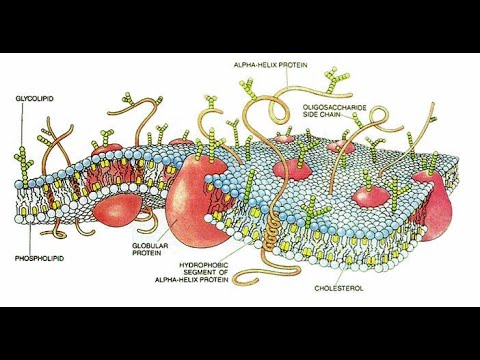
- 7:24: Cells, even in simple life forms like bacteria, are highly complex and interdependent.
- 9:24: Evolutionists propose that all specialized cells spontaneously generated and communicated by chance.
- 9:54: The ability of cells to repair themselves challenges the notion of chance in evolution.
- 10:56: Charles Darwin himself acknowledged the inimitable contrivances of the human eye.
Complexity of the human eye explained by Dr. Richard Kent, including its functions and anatomy.
- 11:45: Human eye is a sophisticated camera controlled by the iris.
- 13:02: Light is made of photons and enters through the transparent conjunctiva.
- 14:14: Lens in the eye accommodates light waves to converge on the retina.
- 14:57: Ciliary muscles adjust lens shape for focusing on near and distant objects.
- 15:20: Specialized cells in the retina capture the formed image.
- 15:34: Windscreen washers in the eye keep the lens clear for proper vision.
- 16:23: Light convergence by lens and cornea forms images on the retina.
Complexity of human eyesight explained in simplified terms, highlighting intricate processes involved in vision.
- 16:29: Light rays converge in the eye to form upside-down images on the retina.
- 16:53: Rods and cones in the retina can distinguish millions of colors.
- 16:59: Retina converts light into electronic impulses transmitted to the visual cortex.
- 18:48: Specialized cells in the retina require precise positioning and complex chemical processes.
- 20:10: Electrical impulses travel along nerves to the brain, processed by neurons in the visual cortex.
- 20:49: Neurons in the brain communicate with each other to interpret visual information.
- 21:31: Human eyesight is a remarkable and intricate system essential for daily functioning.
Critique of evolution theory, emphasizing complexity and design in human cells.
- 21:43: Criticism of evolution theory based on complexity and design in human cells.
- 22:04: Rejection of the idea that evolution happened by chance.
- 23:30: Emphasis on the supernatural and intelligent design in the creation of life.
- 23:45: Reference to Charles Darwin’s own doubts about the absurdity of chance in evolution.
- 23:50: Encouragement for feedback and engagement with viewers.
- 23:56: Promotion of a website for further information on the topic.
- 24:19: Acknowledgment of viewers’ importance and specialness to the program.
Recap for https://youtu.be/iybU3shPySc