
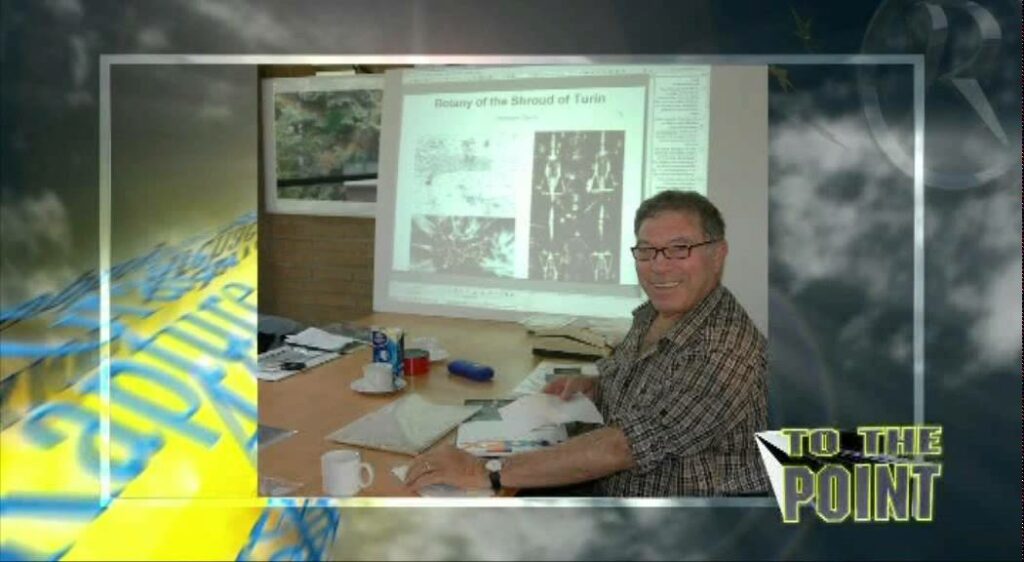
Exploring the Shroud of Turin: A Fascinating Journey
In the upcoming sessions, we’ll delve into the mysterious Shroud of Turin. I invite you to form your own opinions, encouraging you to look beyond popular beliefs. Despite widespread scepticism, I’ll explain why, in just three minutes, the Shroud’s authenticity becomes compelling.
Unveiling the Shroud: A Photographic Revelation
Take a look at the iconic photograph – a positive image of the Shroud’s actual imprint. If this represents Jesus Christ’s face, it sparks profound questions. Join me as we explore the burial of Jesus, scrutinize radiocarbon dating, and unravel the scientific enigma behind the Shroud.
Resurrection and Radiocarbon Dating
Radiocarbon dating, often deemed conclusive, may have been misinterpreted. The Shroud’s radioactivity, I argue, results from the resurrection. Scientifically, I firmly believe the Shroud substantiates Jesus Christ’s resurrection. Nevertheless, I encourage you to form your independent perspective.
Shroud of Turin: A Parable Unveiled
Moving forward, consider the Shroud as a parable – a scientific narrative decipherable to genuine Bible believers. Beyond the surface, many see but fail to comprehend. My plea: observe, understand, and embrace the Shroud of Turin’s significance.
Decoding the Shroud: Photo Negative and Photo Positive
Understanding the Shroud involves recognizing photo negative and photo positive concepts. In the early days of photography, negatives captured a different reality. On the Shroud, a photo negative image astounds, as seen in the work of Secundo Pierre in 1898.
Controversy: Leonardo da Vinci and Shroud Creation
Controversy surrounds the Shroud’s creator. Could Leonardo da Vinci, a brilliant mind of his time, have fashioned the Shroud? Examining da Vinci’s skills, we question the possibility of creating a three-dimensional image akin to the Shroud.
VP8 Image Analyzing Computer: A Revelation
Introducing the VP8 Image Analyzing Computer, developed during space research, we explore its application on the Shroud. Witness the astonishing revelation of a three-dimensional encoding, unique to the Shroud of Turin.
Forensic Examination: Dr. Robert Buckland’s Insights
Turning to forensic analysis, Dr. Robert Buckland, a seasoned pathologist, conducted a detailed examination. His findings indicate a sequence of events consistent only with Jesus Christ’s crucifixion.
Dr. Max Fry’s Botanical Discoveries
Dr. Max Fry, a botanist, extensively sampled the Shroud in the 1970s and 1978. His findings revealed diverse spores and pollen, uniquely tied to plants found only in Jerusalem. Notably, his research shed light on the Shroud’s origins.
Image 42: Pollen and Spores
Examining Image 42, Dr. Fry’s findings underscore the abundance of spores on the Shroud, reinforcing its connection to Jerusalem.
Dr. Avinam Danin’s Contributions
Dr. Avinam Danin, a botany professor at the Hebrew University in Jerusalem, furthered the investigation. His discoveries, including specific plant spores, pointed unequivocally to the Shroud originating from Jerusalem.
Image 43: Zygothelum Dumosum
Image 43 illustrates Dr. Danin’s identification of Zygothelum Dumosum spores on the Shroud, reinforcing its Jerusalem origin.
Image 44: Guandelia 2040
Continuing, Dr. Danin identified Guandelia 2040 spores, confidently asserting the Shroud’s Jerusalem provenance.
Shroud of Turin: A Controversial Perspective
Despite widespread skepticism, this segment challenges the prevailing notion that the Shroud of Turin is a forgery, primarily based on radiocarbon dating placing it around 1325 AD.
Part One Recap
In the first part, we presented arguments against the Shroud’s fraudulent nature, emphasizing its unique three-dimensional and X-ray properties.
Exploring the Resurrection Connection
Part Two delves into the resurrection of Jesus Christ and its potential role in the Shroud’s mysterious image.
Image 46: Garden Tomb in Jerusalem
Examining Image 46, we explore the limestone tomb in Jerusalem associated with Jesus. Researchers Joseph Kolbeck and Richard Levy Ceti identified specific limestone traces on the Shroud, aligning it with Jerusalem.
Coins Over the Eyes
Professor Alan Wanger’s photo imaging techniques, revealed in Image 47, exposed coins over the Shroud’s eyes, potentially dating back to Pontius Pilate’s era.
Widows’ Mites and Shroud of Oviedo
Image 48 details widows’ mites and the correlation between the Shroud of Turin and the Shroud of Oviedo. Dr. Wanger’s insights connect specific coins to Pontius Pilate’s minting in AD 29.
Scientific Insights: The Shroud’s Unique Properties
This section explores Dr. August Assata’s groundbreaking research, establishing a scientific foundation for the Shroud’s authenticity.
Image 51: Dr. August Assata’s Contribution
Radiologist Dr. August Assata’s work, highlighted in Image 51, demonstrated the Shroud’s three-dimensional image formation through a groundbreaking experiment with radioactive material.
Image 54: Radiation Confirmation
Image 54 reinforces the radiation theory, showcasing the Shroud’s radioactive qualities, including gamma rays, X-rays, and infrared light.
Shroud’s Image Formation: A Biblical Perspective
Now, we shift from scientific discussions to biblical considerations, exploring the transfiguration and its potential links to the Shroud.
Image 55: The Transfiguration
Describing the transfiguration in Matthew 17:1-3, Image 55 portrays a pivotal moment when Jesus’ face shone like the sun, setting the stage for intriguing interpretations.
Image 56: Radiant Face
Image 56 elaborates on the radiant face during the transfiguration, drawing parallels between divine illumination and the Shroud’s unique properties.
Image 57: Moses and Elijah
Examining Image 57, we note the presence of Moses and Elijah during the transfiguration, suggesting a connection to the Shroud’s origin.
Image 58: God Clothed in Light
Image 58 introduces the biblical concept of God being clothed in light, aligning with the potential events during the transfiguration.
Theoretical Physics: Event Horizon and Shroud’s Origin
A leap into theoretical physics, particularly the concept of an event horizon, sheds light on the Shroud’s extraordinary nature.
Image 59: Albert Einstein’s Equation
Albert Einstein’s famous equation, E=mc², presented in Image 59, introduces the theoretical framework for understanding the Shroud’s image formation.
Image 60: Moses on Mount Sinai
Exploring Image 60, we draw parallels between Moses’ encounter with God on Mount Sinai and the Shroud’s potential exposure to divine light.
Image 61: Glowing Face of Moses
Image 61 captures the radiant face of Moses after encountering God, offering a speculative link to the Shroud’s image formation.
Carbon Dating Dilemma
This segment addresses the challenges posed by carbon dating and its implications for the Shroud’s authenticity.
Image 67: Carbon Dating Controversy
Image 67 introduces the contentious carbon dating results placing the Shroud’s origin between 1260 and 1390, sparking debates about its legitimacy.
Image 70: Periodic Table and Carbon Isotopes
A brief overview of the periodic table and carbon isotopes in Image 70 sets the stage for unraveling the complexities of radiocarbon dating.
Image 73: Linen and Flax
Image 73 emphasizes the Shroud’s composition of linen made from flax, a crucial factor in understanding carbon dating discrepancies.
Image 75: Radiocarbon Dating Graph
Image 75 presents a radiocarbon dating graph, revealing the expected decay of radioactive carbon over time and its application to the Shroud’s analysis.
Image 78: Highly Radioactive Shroud
Highlighting Image 78, we confront the unexpected discovery of a highly radioactive Shroud, challenging conventional dating expectations.
Image 79: Expectation vs. Reality
Image 79 contrasts the anticipated findings of a non-radioactive Shroud with the actual highly radioactive results, raising questions about interpretation.
Image 80: Image Burnt by Radioactivity
Image 80 displays the image burnt on the Shroud by radioactivity, reinforcing the unique nature of its formation.
Image 81: X-ray Appearances
Image 81 showcases the X-ray appearances burnt on the Shroud by radiation, adding another layer to the complexity of its origin.
Image 82: Three-Dimensional Qualities
Image 82 introduces the Shroud’s three-dimensional qualities, challenging any attempts to replicate such features by conventional means.
Nobel Prize Perspective: Isabelle Piczek
Nobel Prize-winning nuclear physicist Isabelle Piczek provides a unique perspective on the Shroud’s formation.
Image 87: Isabelle Piczek’s Insights
Image 87 introduces Isabelle Piczek’s insights into the Shroud’s image formation during an event horizon, challenging known laws of physics.
Image 89: Event Horizon Representation
Image 89 presents a representation of an event horizon, aligning with Piczek’s theories on the Shroud’s unique image formation.
Concluding Thoughts
As we conclude our exploration, we acknowledge the multi-faceted nature of the Shroud of Turin. Scientific, biblical, and theoretical physics perspectives converge, leaving us with an enigma that continues to captivate and challenge our understanding of history, faith, and the mysterious forces at play.