
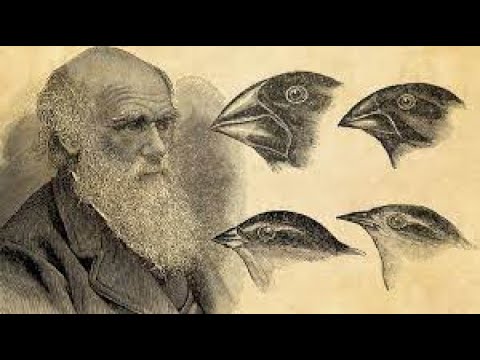
Unveiling the Truth: Evolution Disproven by Darwin’s Finches
Hello, I’m Richard Kent. Today, let’s delve into the renowned Charles Darwin and his celebrated finches, a pivotal aspect of his work during his voyage to the Galapagos Islands in the 1830s aboard the HMS Beagle. This expedition culminated in his groundbreaking 1859 publication, “The Origin of Species.” However, it’s essential to scrutinize the finer details of what Darwin actually discovered and assess its implications for the theory of evolution.
The Finches of the Galapagos: A Closer Look
Upon reaching the Galapagos Islands, Darwin encountered 13 distinct varieties of finches, each showcasing variations in beak length and breadth. These small, plump birds adapted their beak structures based on their dietary needs, such as foraging for insects or cracking nuts. Darwin postulated that these variations in beak design stemmed from a primitive finch, laying the foundation for his theory of evolution.
Gene Pools and Microevolution
Let’s delve into the concept of gene pools within populations. Using dogs as an example, various gene pools exist for characteristics like size, coat length, and bark intensity. However, it’s crucial to note that these variations occur within the confines of a species. Attempting to cross distinct species, like a dog and a cat, proves unsuccessful. Even within the human population, diverse traits like hair color, eye color, and skin type exist due to the human gene pool.
Microevolution vs. True Evolution
The crux of the matter lies in distinguishing between microevolution, observed as variations within a species, and true evolution, where one species transforms into another. Darwin’s observations primarily captured microevolution, showcasing diverse finch characteristics within a single species. The transformative leap from one species to another, such as a cat evolving into a dog, has never been witnessed.
God’s Design: Species in Their Likeness
It is essential to recognize that when God created the universe, animals, birds, and fish, He designed distinct kinds. Humans, crafted in His exact likeness, are part of this intricate plan. Darwin’s finches, while contributing to the understanding of microevolution, do not support the broader claims of species transitioning into entirely different kinds.
In conclusion, don’t be misled by misconceptions surrounding Darwin’s finches. True science aligns with the biblical truth found in Genesis Chapter One. As we explore the wonders of the natural world, let’s seek clarity and discern the difference between microevolution and the broader concept of evolution. Thank you for joining me, and may the pursuit of truth guide your understanding.