
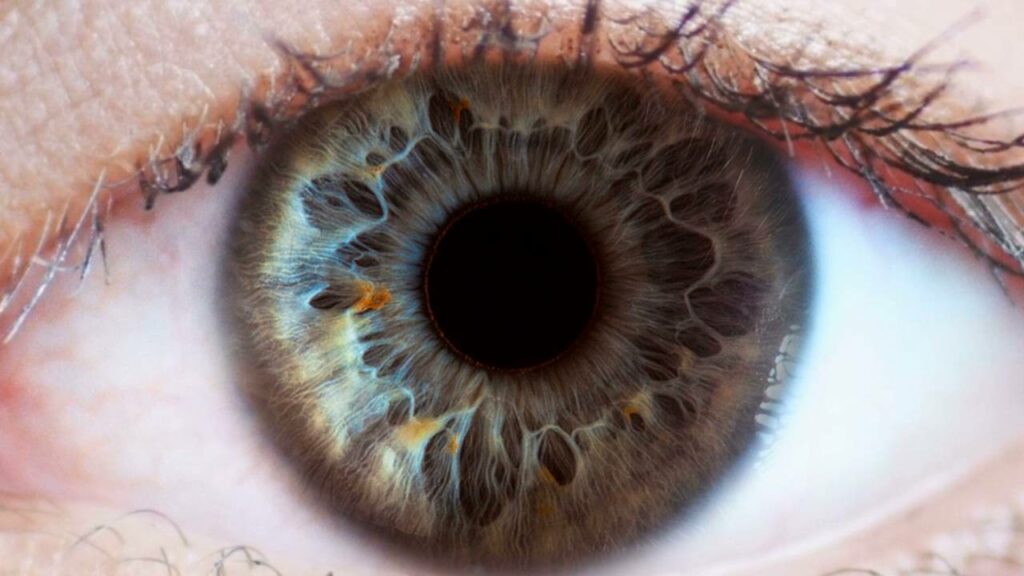
Unlocking the Wonders of the Human Eye: A Supernatural Marvel
Introduction: The Extraordinary Human Eye
Hello, I’m Richard Kent. Today, let’s embark on a journey to unravel the extraordinary marvel of the human eye. Often taken for granted, our eyes possess a complexity and sophistication that defy conventional explanation.
The Miracle of Stereoscopic Vision
We navigate the world with the gift of stereoscopic vision, a remarkable ability to perceive depth in three dimensions. Yet, behind this seemingly effortless process lies a miraculous design crafted by a divine intelligence.
The Complexity of Visual Perception
Contrary to the notion of chance evolution, the human eye is a masterpiece of intricate design. It operates akin to a sophisticated camera, processing light as photons and converting them into electronic images through specialized cells in the retina.
Divine Design: From Cornea to Retina
At the forefront of visual perception lies the cornea, a transparent marvel that allows light to enter the eye. With precision akin to divine craftsmanship, the lens of the eye adjusts its curvature to focus light onto the retina, where the magic of sight begins.
Navigating Complexity: Muscles and Nervous System
Specially designed muscles around the lens ensure that light is focused precisely onto the retina, while maintaining optimal pressure within the eye. Meanwhile, the rods and cones in the retina engage in thousands of chemical reactions to translate light into electronic signals.
The Intricacies of Visual Processing
Electronic impulses generated in the retina travel along the optic nerve to the visual cortex, where neurons meticulously process and assemble this data into a coherent three-dimensional image. It’s a symphony of neural communication orchestrated with divine precision.
Adapting to Movement: A Divine Choreography
Even in motion, our eyes seamlessly adjust to changing angles and distances. Whether traveling at 30 or 100 miles per hour, the muscles around our eyes synchronize to maintain focus, a feat that defies mere chance or evolutionary happenstance.
The Absurdity of Chance: Darwin’s Admission
Even Charles Darwin himself, in his seminal work “The Origin of Species,” conceded the absurdity of attributing the complexity of the human eye to natural selection. Darwin’s acknowledgment underscores the divine craftsmanship inherent in our visual faculties.
Conclusion: A Testament to Divine Intelligence
In conclusion, the human eye stands as a testament to the boundless creativity and intelligence of its Creator. From its intricate design to its seamless functionality, every aspect of the eye reflects the handiwork of a supremely intelligent God.